
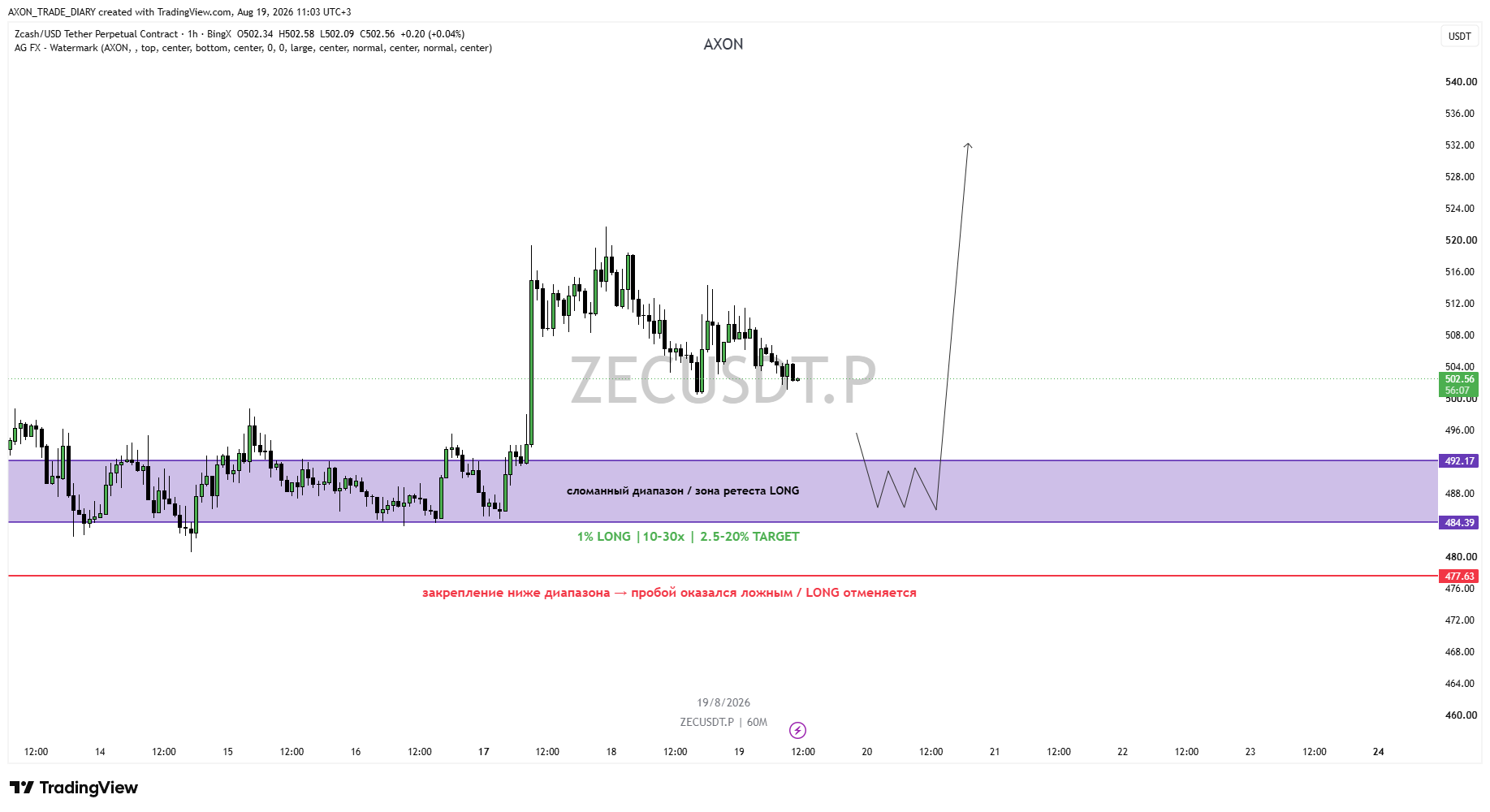
У #ZEC картина другая и, на мой взгляд, даже чище.
До импульса вверх актив достаточно долго торговался внутри диапазона примерно 484–492. Верхнюю границу неоднократно тестировали, но нормально выйти выше долго не получалось.
Затем рынок всё-таки пробил диапазон и быстро ушёл к 510–520+.
Теперь интересен классический сценарий: накопление → пробой сопротивления → возврат к бывшему диапазону → попытка продолжить рост. Поэтому 492.17–484.39 рассматриваю как зону потенциального ретеста. То, что раньше удерживало цену сверху, после пробоя может уже выступить поддержкой.
Вход: две лимитки — 492.17 и 484.39. Стоп / отмена: 477.63. Потенциал: примерно 2.5–20% чистого движения. Риск: 1% на всю идею — по 0.5% на каждую лимитку. Плечо 10–30x, размер от риска.
Здесь особенно важно не само касание зоны, а то, как цена будет вести себя после прихода. Возврат внутрь диапазона, удержание и реакция покупателя — нормальный ретест после пробоя. Если рынок возвращается вниз и спокойно закрепляется под всей старой структурой, предыдущий импульс уже можно считать потенциально ложным пробоем. Поэтому инвалидация вынесена ниже диапазона.
По сравнению с PYTH расстояние до зоны здесь заметно меньше, поэтому разбор вполне может активироваться быстрее. Принцип тот же: не догоняем движение после импульса, а ждём место, где соотношение риска к потенциальному продолжению становится интереснее. Из этих двух сетапов ZEC мне сейчас нравится чуть больше именно по чистоте структуры.
Параметры сделки
- Лимитки /
- Стоп
- Риск1% · по 0.5% на лимитку
- Цель2.5–20% чистого движения